Grasslands
Designed by University of Stirling with EcoKnow Creator 1.0
The Situation
There's an invasive species, purple loosestrife. Can you slow it down in this Scenario?
Ready to Play?
Copy the Scenario to your clipboard and paste it into the Player:
Play → Load External Scenario
Over 32 rounds, with 4 actions per round and a budget of 40 credits, you must manage the ecosystem to meet your objectives.
What is Tallgrass Prairie?
Once covering over 170 million acres of North America, tallgrass prairie is one of the most endangered ecosystems on Earth. Less than 4% remains today, lost mainly to agriculture.
These grasslands depend on a diverse mix of native species to stay healthy. When invasive plants like purple loosestrife take hold, they can quickly displace the natives that wildlife depends on.
You can perform limited actions to try to meet your Objectives.
You can Introduce or Harvest certain entities, others you can only observe.
Understanding how they interact across zones is key to your strategy and it will take some trial and error.
Introduce These

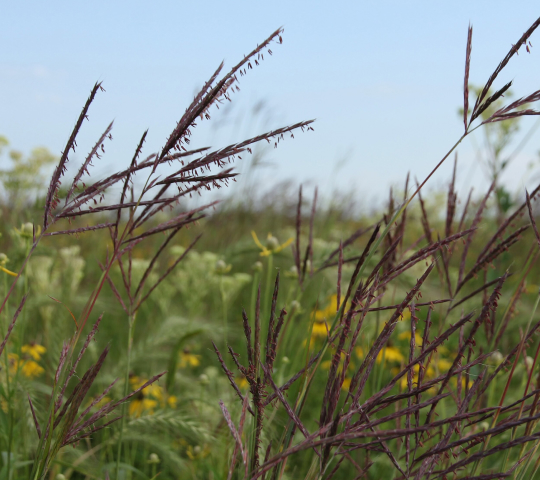
Big Bluestem
A tall, warm-season prairie grass that can grow over 2 metres high. It's one of the dominant species of the tallgrass prairie and provides excellent habitat for wildlife.

Switchgrass
A hardy native grass used for erosion control and as a biofuel crop. It establishes quickly and can tolerate a wide range of soil conditions.

Little Bluestem
A medium-height bunchgrass recognised by its distinctive blue-green stems that turn bronze-red in autumn. It thrives in dry, well-drained soils.

Wild Rye
A cool-season grass that establishes faster than most native grasses. It provides early ground cover and helps suppress weeds while slower species take hold.

Prairie Dropseed
A fine-textured, slow-growing grass prized for its delicate seed heads and sweet fragrance. Once established, it's extremely drought-tolerant and long-lived.

Corn
A fast-growing crop that competes for resources with native grasses. It can be harvested for income but may disrupt the balance of the prairie ecosystem.
To Meet Objectives

Purple Loosestrife Population
Remove all purple loosestrife for 5 rounds
Keep Purple Loosestrife below 1 for 5 rounds
Big Bluestem
Keep it above 500
Keep Big Bluestem above 500
A collaboration between:
